Shadow IT Prevention Checklist for Cloud Environments
Unmanaged software creates hidden data exfiltration paths that bypass network controls and leave compliance gaps invisible to standard audits.

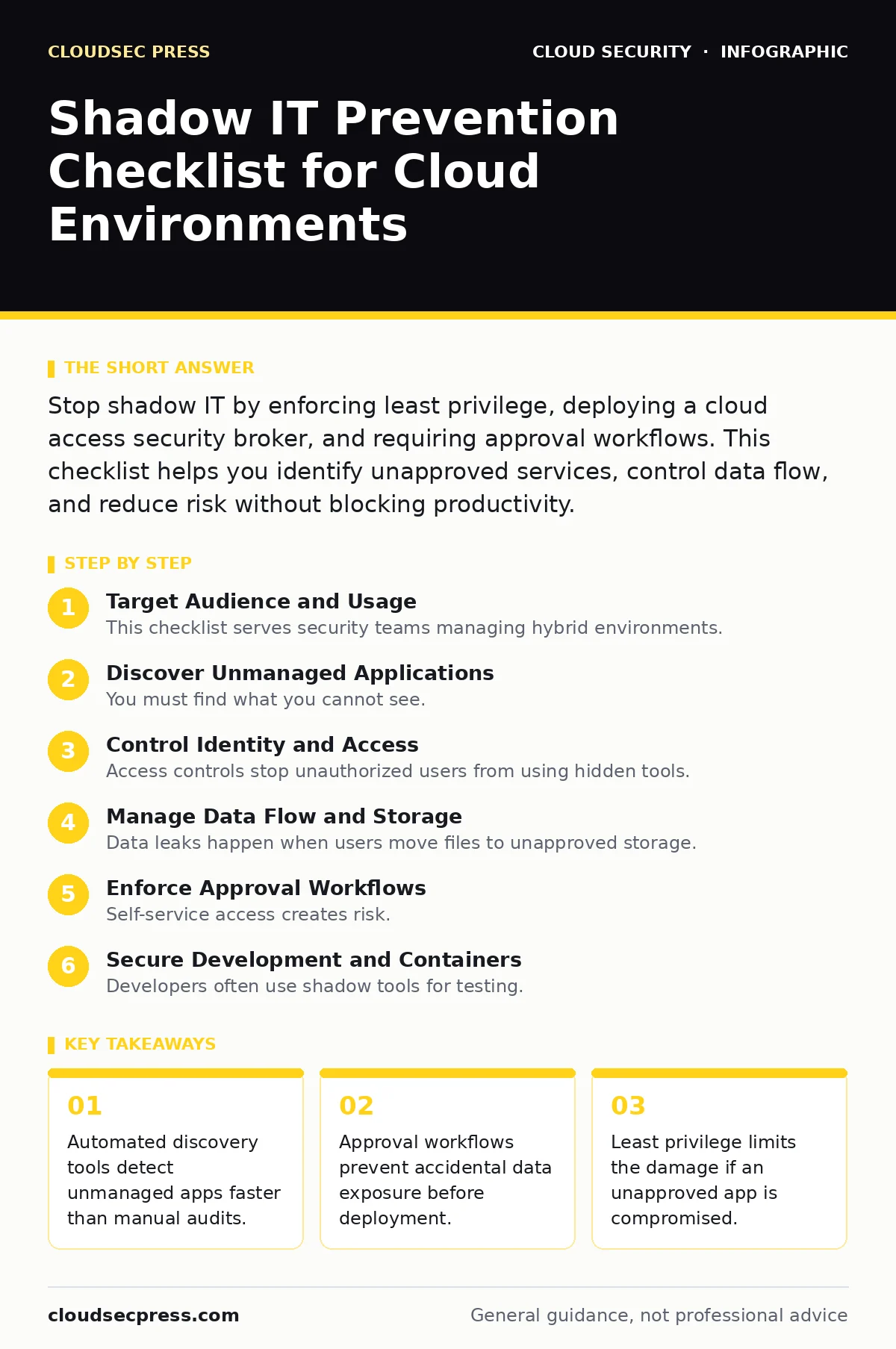
Stop shadow IT by enforcing least privilege, deploying a cloud access security broker, and requiring approval workflows. This checklist helps you identify unapproved services, control data flow, and reduce risk without blocking productivity.
Target Audience and Usage
This checklist serves security teams managing hybrid environments. Use it to audit current controls and plan new restrictions. Start with discovery, then move to enforcement. Review these items quarterly or after major changes.
Discover Unmanaged Applications
You must find what you cannot see. Shadow IT thrives in blind spots. Use automated tools to scan traffic and identify unknown services.
- Enable cloud access security broker (CASB) logging: CASB tools inspect traffic to find unapproved cloud apps.
- Monitor DNS query logs: Unusual domains often indicate connections to unknown SaaS platforms.
- Review OAuth consent grants: Users often grant excessive permissions to new apps without noticing.
- Check network proxy logs: Proxy servers record all outbound HTTP and HTTPS requests for analysis.
Control Identity and Access
Access controls stop unauthorized users from using hidden tools. Weak identity management allows shadow IT to spread. Enforce strict verification methods.
- Enforce multi-factor authentication (MFA): MFA adds a second check, blocking attackers who steal passwords.
- Implement single sign-on (SSO): SSO centralizes login, making it easier to track and revoke access.
- Review identity and access management (IAM) policies: Regular audits ensure users only have necessary permissions.
- Disable legacy authentication protocols: Older protocols lack modern security checks and are easier to bypass.
Manage Data Flow and Storage
Data leaks happen when users move files to unapproved storage. You must control where data goes. Restrict uploads and monitor transfers.
- Block unauthorized file uploads: Prevent users from sending sensitive data to unknown cloud storage services.
- Encrypt data at rest: Encryption protects data even if it lands in an unsecured cloud database.
- Monitor data egress patterns: Large outbound transfers often signal unauthorized data exfiltration attempts.
- Define data classification rules: Labeling data helps systems automatically apply stricter controls to sensitive files.
Enforce Approval Workflows
Self-service access creates risk. Require approval before new tools can be used. This slows down adoption but increases security.
- Require IT approval for new SaaS apps: Centralized review ensures new tools meet security standards.
- Automate SaaS access reviews: Regular automated checks verify that existing access remains appropriate.
- Document approved application lists: A clear list helps users know which tools are safe to use.
- Set up alerts for new app registrations: Immediate notification allows quick investigation of suspicious activity.
See also: 7 Payment Card Theft Mistakes That Leave Your Business Open · Cloud Migration Security Checklist: Stop Data Leaks Before Launch
Secure Development and Containers
Developers often use shadow tools for testing. Unsecured container images can introduce vulnerabilities. Control the development environment.
- Scan container images for vulnerabilities: Automated scans find known security flaws before deployment.
- Use approved development environments: Standardized environments reduce the risk of introducing insecure tools.
- Monitor API usage patterns: Unusual API calls may indicate unauthorized integration with external services.
- Restrict build pipeline permissions: Limiting access prevents unauthorized changes to deployment processes.
Educate and Train Users
Users create shadow IT because they need tools to do their jobs. Training helps them understand the risks and proper channels.
- Teach users to recognize phishing: Phishing often leads to unauthorized account creation and data loss.
- Explain data handling policies: Clear rules help users understand why certain apps are blocked.
- Provide easy ways to request new tools: Simple processes reduce the temptation to use unauthorized alternatives.
- Share examples of bot management risks: Bots can automate attacks, making unauthorized apps dangerous.
Monitor and Respond
Continuous monitoring catches what initial controls miss. Respond quickly to new threats. Update your strategies regularly.
- Review security logs daily: Daily checks help spot anomalies before they become breaches.
- Update cloud security architecture: Regular updates ensure your defenses match current threats.
- Test incident response plans: Testing reveals gaps in your ability to handle shadow IT incidents.
- Track SaaS account takeover attempts: Monitoring for takeover signs helps prevent unauthorized access.
Key takeaways
- Automated discovery tools detect unmanaged apps faster than manual audits.
- Approval workflows prevent accidental data exposure before deployment.
- Least privilege limits the damage if an unapproved app is compromised.
Frequently asked questions
How do I find shadow IT without blocking productivity?
Use non-intrusive discovery tools like CASB to identify apps first. Then work with teams to find approved alternatives that meet their needs.
What is the biggest risk of shadow IT?
Data leakage is the primary risk. Unapproved apps often lack proper security controls, making them easy targets for attackers.
Can I trust users to report shadow IT?
Users rarely report it voluntarily due to fear of punishment. Create a safe reporting channel and focus on education rather than blame.
How often should I review my shadow IT checklist?
Review it quarterly or after any major organizational change. Regular reviews ensure your controls remain effective against new threats.
How this guide was produced: written by the CloudSec Press editorial team with AI assistance, checked against the public references listed below, and reviewed when the facts change. See our editorial policy or report an error.