Incident Triage: How to Prioritize Alerts and Stop the Bleeding
Incident triage separates signal from noise by ranking alerts based on potential impact, ensuring your team investigates the right threats first.
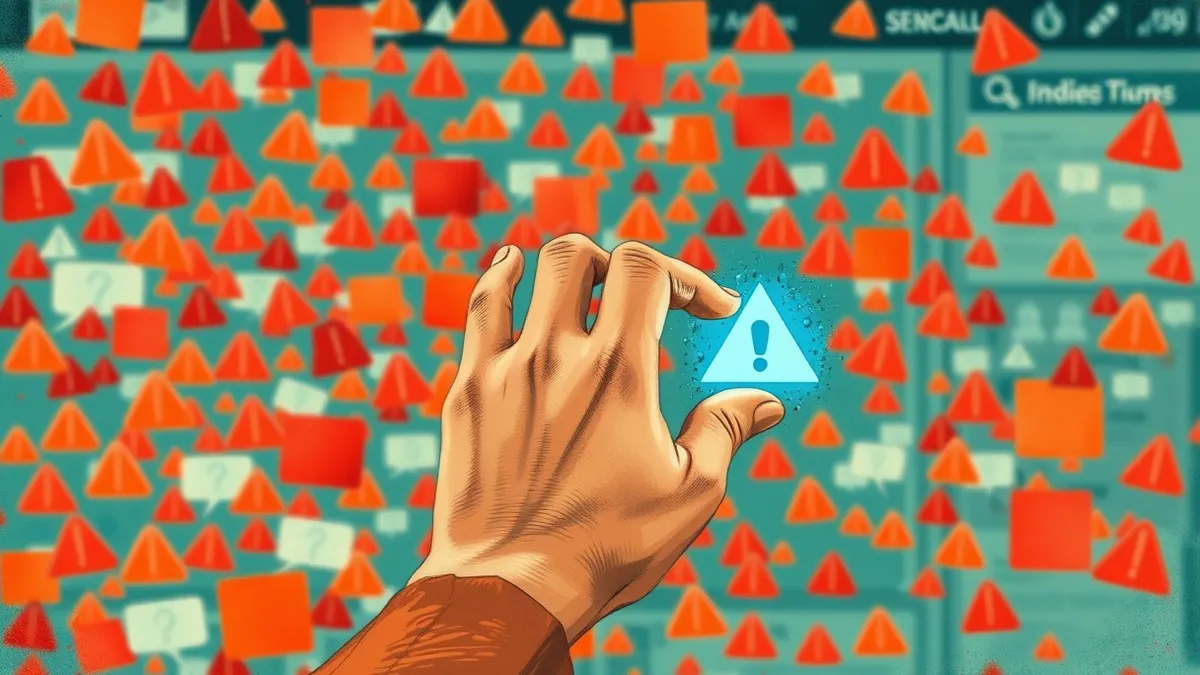
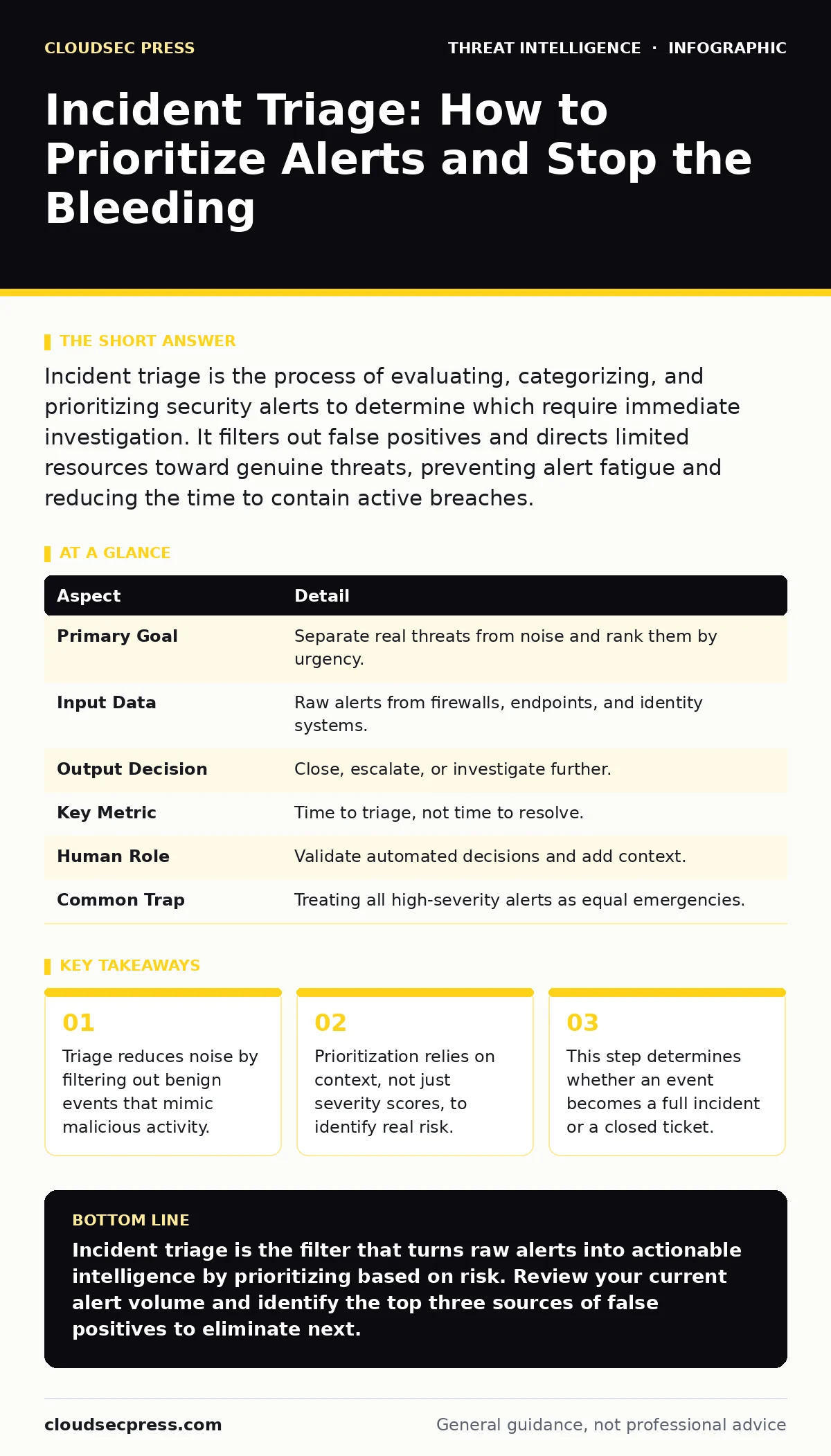
Incident triage is the process of evaluating, categorizing, and prioritizing security alerts to determine which require immediate investigation. It filters out false positives and directs limited resources toward genuine threats, preventing alert fatigue and reducing the time to contain active breaches.
The Fire Station Analogy
Imagine a fire station receiving three calls at once. One reports a trash can burning in an alley. Another claims the city hall is on fire. The third says a car is smoking in a parking lot. The dispatcher does not send all engines to every location. She assesses the potential loss of life and property to decide which call gets immediate resources.
Security operations face the same problem. Your monitoring tools generate thousands of signals daily. You cannot investigate every single one with equal intensity. Triage is the dispatcher’s job. It sorts the noise from the emergency so you can focus your energy where it matters most.
Defining Incident Triage
Incident triage is the initial evaluation of a security alert to determine its validity and priority. It happens before deep investigation or remediation. The goal is not to solve the problem yet, but to decide if a problem exists and how urgent it is.
This process filters out false positives, which are alerts triggered by normal activity that looks suspicious. It also categorizes true positives based on their potential impact. Without triage, your team suffers from alert fatigue, where constant noise causes them to miss real threats.
| Aspect | Detail |
|---|---|
| Primary Goal | Separate real threats from noise and rank them by urgency. |
| Input Data | Raw alerts from firewalls, endpoints, and identity systems. |
| Output Decision | Close, escalate, or investigate further. |
| Key Metric | Time to triage, not time to resolve. |
| Human Role | Validate automated decisions and add context. |
| Common Trap | Treating all high-severity alerts as equal emergencies. |
The Problem of Noise
Security tools are designed to be sensitive. They would rather flag a hundred harmless events than miss one attack. This creates a flood of data. If you treat every alert as a crisis, you burn out your analysts and slow down your response.
Triage solves this by applying filters. It uses known good patterns to dismiss routine activity. It also groups similar alerts. If ten users fail to log in because a password reset policy changed, that is one event, not ten separate attacks. By consolidating these signals, you reduce the workload significantly.
This reduction allows you to apply context. A failed login from a known employee in their usual city is low risk. The same failed login from a new device in a different country is high risk. Triage adds this layer of understanding before you open a full investigation.
How Triage Fits in Defense
Triage sits between detection and response. It is the gatekeeper. Detection tools like a SIEM collect logs and generate alerts. Response teams handle containment and recovery. Triage decides which alerts cross the bridge between these two phases.
It also feeds into operational threat intelligence. When you triage an alert, you check if the indicators match known threat patterns. If they do, you can prioritize the event higher. This connection ensures you are not reacting in a vacuum. You are using existing knowledge to guide your immediate actions.
This process supports automation tools like SOAR. These platforms can automatically perform initial triage steps, such as checking IP reputation or isolating a host. They handle the repetitive work, leaving complex decisions for humans. This partnership speeds up the process and reduces errors.
The Mechanics of Prioritization
Not all incidents are created equal. Triage uses a scoring system to rank alerts. This score usually combines likelihood and impact. Likelihood asks how probable it is that this is a real attack. Impact asks how much damage it could cause if it is real.
You must define these criteria clearly. An alert about a server going offline has high impact but might be a maintenance task. An alert about a user downloading a small file has low impact but might be the start of a data exfiltration. You need to weigh these factors consistently.
Consider the Pyramid of Pain. This model describes how difficult it is for attackers to change different aspects of their operation. Triage should prioritize indicators that are high on the pyramid, such as tools or tactics, over low-hanging fruit like IP addresses. Attacking the harder-to-change elements disrupts the adversary more effectively.
See also: Ransomware Recovery Plans: 8 Practices for Downtime Reduction · Cyber Espionage Prevention Checklist: Stop Silent Data Theft
What People Get Wrong
Many teams treat triage as a binary switch. They think an alert is either real or fake. This ignores the middle ground. Some alerts are suspicious but not urgent. They require monitoring rather than immediate action. Categorizing these correctly prevents unnecessary panic.
Another mistake is relying solely on automated scores. Algorithms can be fooled. They might miss subtle context that a human would catch. For instance, an alert might look like a DCSync attacks attempt, which is a serious breach of Active Directory. But if the source is a scheduled backup task, it is safe. Automation needs human validation to avoid false escalations.
Teams also often skip the closure step. When an alert is dismissed, it should be documented. This data improves future triage. If you dismiss an alert without recording why, you lose the chance to tune your detection rules. Over time, this leads to more noise, not less.
Improving Your Triage Process
Start by cleaning your detection rules. If an alert fires too often for normal activity, adjust it. Reduce the noise at the source. Then, implement automated enrichment. Let your tools gather basic context, like user history or asset value, before the alert reaches a human.
Train your team on common patterns. They should recognize standard benign activities quickly. This builds speed and confidence. Regularly review closed tickets. Look for trends in false positives and adjust your thresholds accordingly.
Remember that triage is iterative. As your environment changes, so do the risks. New applications, remote work, and cloud services introduce new variables. Your triage logic must evolve to reflect these changes. Static rules become obsolete quickly.
The Role of Intelligence
Triage is not just about internal data. It benefits from external insights. Knowing what threat actors are currently targeting helps you prioritize. If intelligence indicates a surge in phishing campaigns against your industry, you might prioritize email alerts higher than usual.
This is where threat actor profiling helps. Understanding the goals and methods of specific groups allows you to anticipate their moves. If you know a group targets specific software, you can triage alerts related to that software with higher urgency.
However, do not rely on intelligence alone. It provides context, not proof. An alert matching a known threat pattern still needs verification. Use intelligence to guide your suspicion, not to replace your analysis. This balance keeps your response both informed and accurate.
Key takeaways
- Triage reduces noise by filtering out benign events that mimic malicious activity.
- Prioritization relies on context, not just severity scores, to identify real risk.
- This step determines whether an event becomes a full incident or a closed ticket.
- Automation handles the initial sorting, but human judgment decides the response.
Incident triage is the filter that turns raw alerts into actionable intelligence by prioritizing based on risk. Review your current alert volume and identify the top three sources of false positives to eliminate next.
Frequently asked questions
How long should incident triage take?
Triage should be fast, often taking only minutes per alert. The goal is to decide on validity and priority, not to solve the incident. Delaying triage slows down the entire response process.
Can AI replace human triage?
AI can automate initial sorting and enrichment, but human judgment is still needed for complex decisions. AI lacks the nuanced understanding of business context that humans provide.
What is the difference between triage and investigation?
Triage determines if an alert is real and how urgent it is. Investigation digs into the details of a confirmed incident to understand the scope and cause. Triage comes first.
How do I measure triage success?
Measure the time to triage and the ratio of false positives to true positives. A successful process minimizes time spent on noise while ensuring no real threats are missed.
How this guide was produced: written by the CloudSec Press editorial team with AI assistance, checked against the public references listed below, and reviewed when the facts change. See our editorial policy or report an error.