Data Breaches Explained: How to Spot the Leak Before It Hurts
A data breach is not just a lost password; it is the permanent loss of control over your digital identity, which attackers monetize long after the initial event.

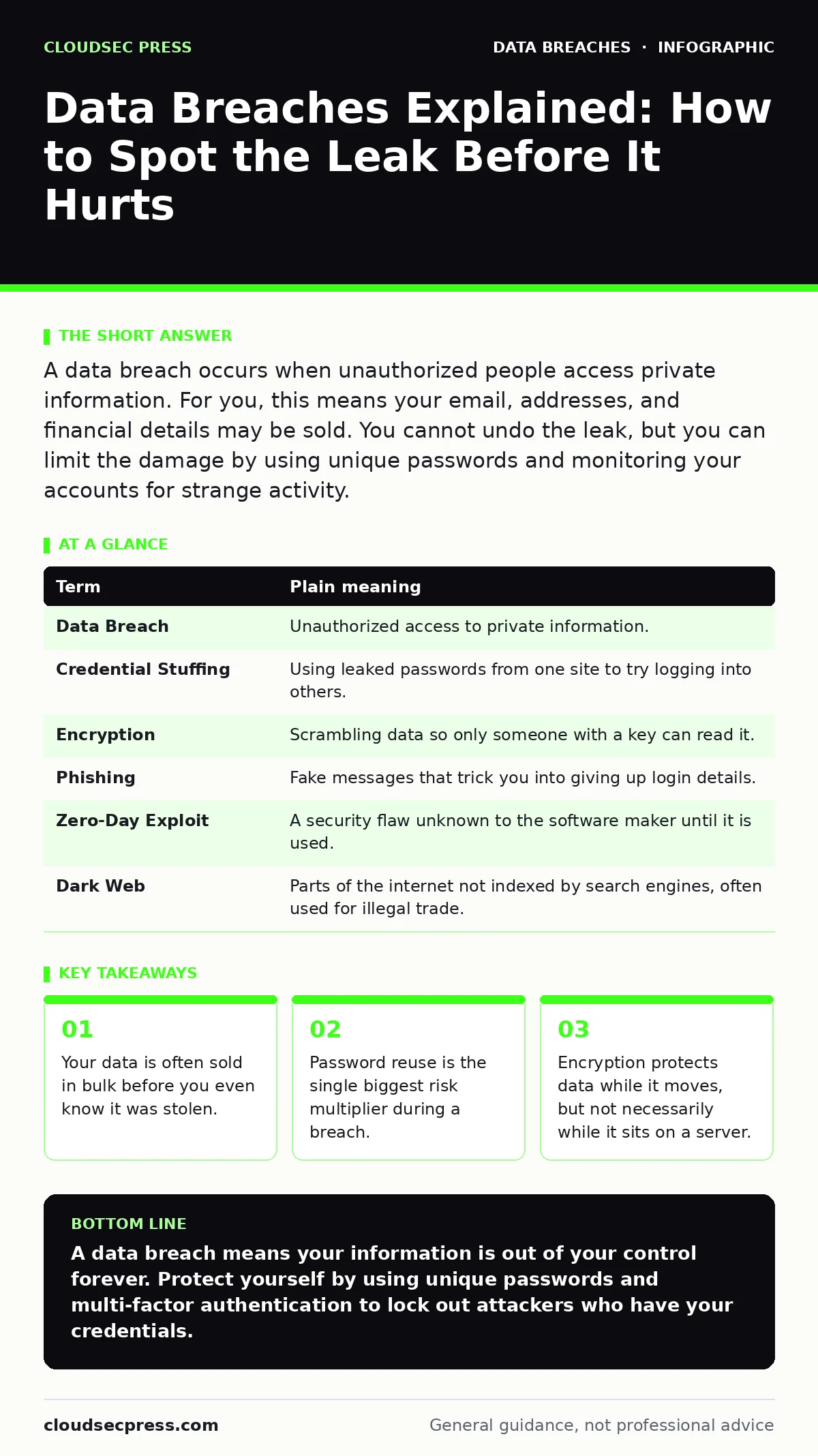
A data breach occurs when unauthorized people access private information. For you, this means your email, addresses, and financial details may be sold. You cannot undo the leak, but you can limit the damage by using unique passwords and monitoring your accounts for strange activity.
The Broken House Analogy
Imagine your personal data is the furniture inside your house. Most people think a data breach is like a burglar breaking a window and stealing your TV. That is too simple. A real breach is more like the construction company losing the master blueprint of your house.
The burglar does not need to break in. They already have the map. They know exactly where the safe is, what code opens it, and which rooms contain valuable items. You cannot get the blueprint back. The only thing you can do is change the locks and move the valuables before the thief arrives.
What Actually Happens
A data breach is the unauthorized access, acquisition, or disclosure of sensitive information. It is not always a dramatic hacking event. Sometimes it is a misplaced laptop. Sometimes it is a misconfigured cloud storage bucket that anyone on the internet can read.
The key mechanism is exposure. Once your data leaves the secure environment of the company that collected it, you lose all control. The company might notify you months later, but the data is already circulating on underground markets. This delay is the hidden cost of modern data collection.
| Term | Plain meaning |
|---|---|
| Data Breach | Unauthorized access to private information. |
| Credential Stuffing | Using leaked passwords from one site to try logging into others. |
| Encryption | Scrambling data so only someone with a key can read it. |
| Phishing | Fake messages that trick you into giving up login details. |
| Zero-Day Exploit | A security flaw unknown to the software maker until it is used. |
| Dark Web | Parts of the internet not indexed by search engines, often used for illegal trade. |
The Silent Cost of Exposure
You might think that if your name and address were stolen, you are safe because you did not give away your bank PIN. This is a dangerous assumption. Attackers use synthetic identity fraud to combine your real data with fake details to create new identities.
They open credit lines in this fake identity, build a credit score, and then max out the accounts. By the time you notice the debt, the identity has been dismantled. This is why a breach of just your name and date of birth is serious. It is the foundation for financial theft that happens slowly over years.
Why Passwords Are Not Enough
Many users believe that a complex password stops breaches. It does not. If a company stores passwords in plain text, your complex password is stolen instantly. If they store them poorly, hackers can reverse-engineer them.
The real danger is password leaks across multiple sites. If you use the same password for your email and your shopping account, a breach of the shopping site gives hackers your email password too. This is called credential stuffing. They automate the login attempts. Your unique password is useless if it is not unique to that one service.
The Role of Encryption
Encryption in transit protects your data while it travels from your computer to the website. It is like sending your furniture in a locked van. However, encryption does not protect the data once it arrives at the destination.
If the server where the data is stored is breached, the encrypted data might still be vulnerable if the attacker also steals the decryption keys. This is why secrets management is critical for companies. They must keep the keys separate from the data. For you, this means trusting companies that follow standards like SOC 2, which audits how they handle your data security.
See also: Synthetic Identity Fraud Explained: How Fake Identities Steal Real Money
Simple Safety Habits
You cannot prevent a breach at a large corporation. You can only mitigate the damage to yourself. Start by using a password manager. It generates unique, complex passwords for every site. You only need to remember one master password.
Next, enable multi-factor authentication (MFA) everywhere possible. MFA requires a second proof of identity, like a code from your phone. Even if hackers have your password, they cannot log in without your phone. This stops credential stuffing attacks in their tracks.
Finally, monitor your financial statements. Look for small, unauthorized charges. These are often test transactions to see if a card number is active. If you see them, report them immediately. Do not wait for the big charge.
- Install a reputable password manager and update all your passwords.
- Turn on multi-factor authentication for email and banking accounts.
- Set up alerts for large transactions or new logins on your accounts.
The Human Element
Not all breaches are technical. Insider data theft happens when an employee with legitimate access steals data. They might be disgruntled or bribed. Technical controls can limit what they can access, but they cannot always stop a determined insider.
This is why companies limit access to only what is necessary. For you, it means being cautious about what personal information you share on social media. Public details make it easier for attackers to bypass security questions or impersonate you.
Key takeaways
- Your data is often sold in bulk before you even know it was stolen.
- Password reuse is the single biggest risk multiplier during a breach.
- Encryption protects data while it moves, but not necessarily while it sits on a server.
A data breach means your information is out of your control forever. Protect yourself by using unique passwords and multi-factor authentication to lock out attackers who have your credentials.
Frequently asked questions
What should I do if I find my email in a breach database?
Change the password for that email account immediately. Enable multi-factor authentication. Check your other accounts for any signs of unauthorized access.
Can I sue the company that suffered the breach?
Laws vary by region. Often, class-action lawsuits are filed, but individual damages are hard to prove. Focus on protecting your identity rather than seeking legal recourse.
Does deleting my account stop the data leak?
No. The data has already been copied and sold. Deleting the account prevents future collection, but it does not remove the data already in the wild.
Are password managers safe if they get breached?
Yes, if you use a unique master password. Password managers encrypt your data locally. Even if their servers are breached, attackers only get encrypted blobs they cannot read.
How this guide was produced: written by the CloudSec Press editorial team with AI assistance, checked against the public references listed below, and reviewed when the facts change. See our editorial policy or report an error.