Is The Gentlemen's KFC Breach Claim Fake? No Technical Proof Found
A ransomware listing for US KFC lacks technical proof, showing only branding and public business details rather than stolen files.
Key points
- The Gentlemen group claimed a breach of US KFC on October 10, 2026.
- No malware hashes, encryption evidence, or stolen data were provided.
- Sophos identifies the group as GOLD SHERWOOD, which uses double extortion.
The Gentlemen ransomware operation has posted an unverified claim alleging a breach of United States KFC systems, according to Cyber Security News. The listing appeared on October 10, 2026, and categorizes the target within the hospitality sector. However, the available material does not establish a confirmed compromise of the fast-food chain’s internal networks or data stores at this time.
Root cause
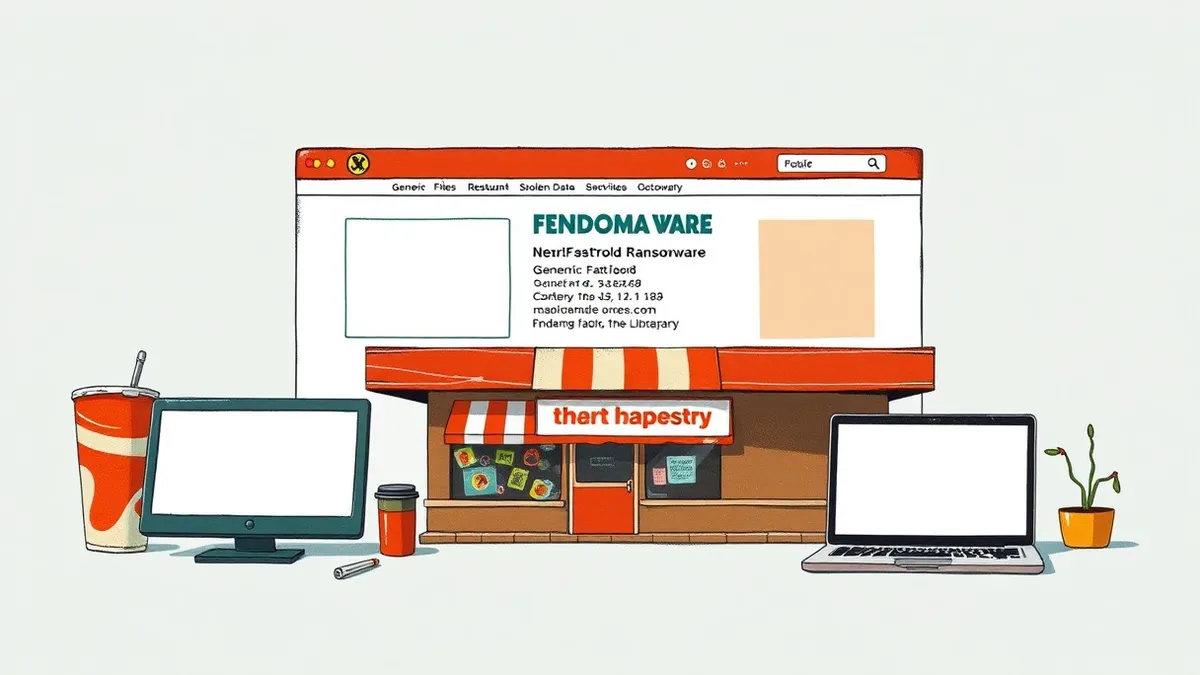
The provided alert contains no technical evidence of a security failure or intrusion. The image associated with the claim displays KFC branding, the kfc.com domain, and a general business description. It lacks visible stolen files, malware hashes, or attacker addresses that would prove unauthorized access. Consequently, the root cause of any alleged breach remains unidentified and unproven by the submitted data.
Attack path
Sophos tracks the Gentlemen operation under the alias GOLD SHERWOOD, describing it as a ransomware service where affiliates use group tools. Their typical method involves stealing data before encrypting files to pressure victims. In previous cases, Sophos observed rapid privilege escalation, use of legitimate remote access tools, and disabling of security controls. Some earlier intrusions reached ransomware deployment within 24 hours of initial compromise, though this pattern is not confirmed for the KFC allegation.
Affected versions
No specific software versions, operating systems, or applications are identified as affected in the current report. The alert does not specify whether the target is a corporate network, a franchise operator, or another entity connected to the brand. This scope remains an unanswered question. Additionally, no KFC-specific malware indicators or verified attack timelines have been released to define the technical footprint of the alleged incident.
Mitigation
The alert includes an ESIX score of 5.23 but offers no explanation of its scoring methodology. This number cannot establish breach severity or confirm data theft. Without company confirmation or independent verification, the allegation remains pending. Organizations should treat such listings as unverified claims until technical artifacts, such as file samples or network logs, are publicly analyzed and validated by security researchers.
What to do and how to stay safe: Gentlemen
- Monitor official company channels for confirmed breach notifications rather than relying on unverified ransomware listings.
- Review logs for unusual remote access tool activity or rapid privilege escalation attempts on internal networks.
- Verify that data backups are isolated and immutable to protect against potential encryption events.
- Ensure that security controls remain active and are not disabled by unauthorized administrative actions.
Step-by-step guide: Data Breaches Explained: How to Spot the Leak Before It Hurts
General security guidance from the CloudSec Press newsroom. It is not confirmed advice from the organisations named in this story.
Frequently asked questions
Has KFC confirmed that its systems were breached by the Gentlemen group?
No, the claim remains unverified and no company confirmation has been provided according to the source material.
What evidence did the Gentlemen group provide to support its claim?
The group provided an image with branding and public business details, but no stolen files or technical proof.
How does Sophos describe the Gentlemen ransomware operation?
Sophos tracks the group as GOLD SHERWOOD, noting a double extortion model using affiliate attacks.